Clove
No one should have to go without a meal. Clove connects you with free and low-cost food resources in your area so you can find the support you need, when you need it.
Browse surplus items from local restaurants, meals from soup kitchens, and groceries from food banks all in one place. Whether you're stocking up for the week or just need a meal today, Clove brings your community's resources together in a simple, easy-to-navigate app.

Chloe Limargo | Dyhara Gongora | Herman Billingsley Jr | Maryam Khawar | Juliana Miloseki | Shaun Tai |
Project Lead | Research Lead | UI Designer | Brand Designer | Primary Coach | Quality Assurance |
Design Sprint, Case Study, Figma, BRIDGEGOOD, 2025, Concept
The Ask
Empower with Empathy, Hosted by BRIDGEGOOD challenged us to tackle a real social problem and turn it into a viable digital product concept, all within four weeks. Following the Google Ventures Design Sprint framework, my team and I moved through discovery, ideation, prototyping, and testing before presenting our solution in a live pitch at the Wells Fargo Offices. Supported by UX Designers and Mentors from BRIDGEGOOD, this project allowed me to develop both my craft and my ability to communicate ideas clearly and confidently under pressure.

The Opportunity
Food insecurity in the Bay Area is a growing crisis. In 2020, the Food Bank of Contra Costa & Solano County served 170,000 people. By 2025, that number had surged to 500,000. Feeding America estimates nearly one million people across the Bay Area struggle to access consistent, affordable food, and the numbers continue to climb.
We know that this issue will only get worse if we leave it alone, but the real barriers are fragmented systems, limited hours, transportation challenges, and the unpredictability of supply. Understanding how these factors keep people trapped in food insecurity led us to three design principles that shaped everything that followed:
accessibility, affordability, and reliability
The Solution
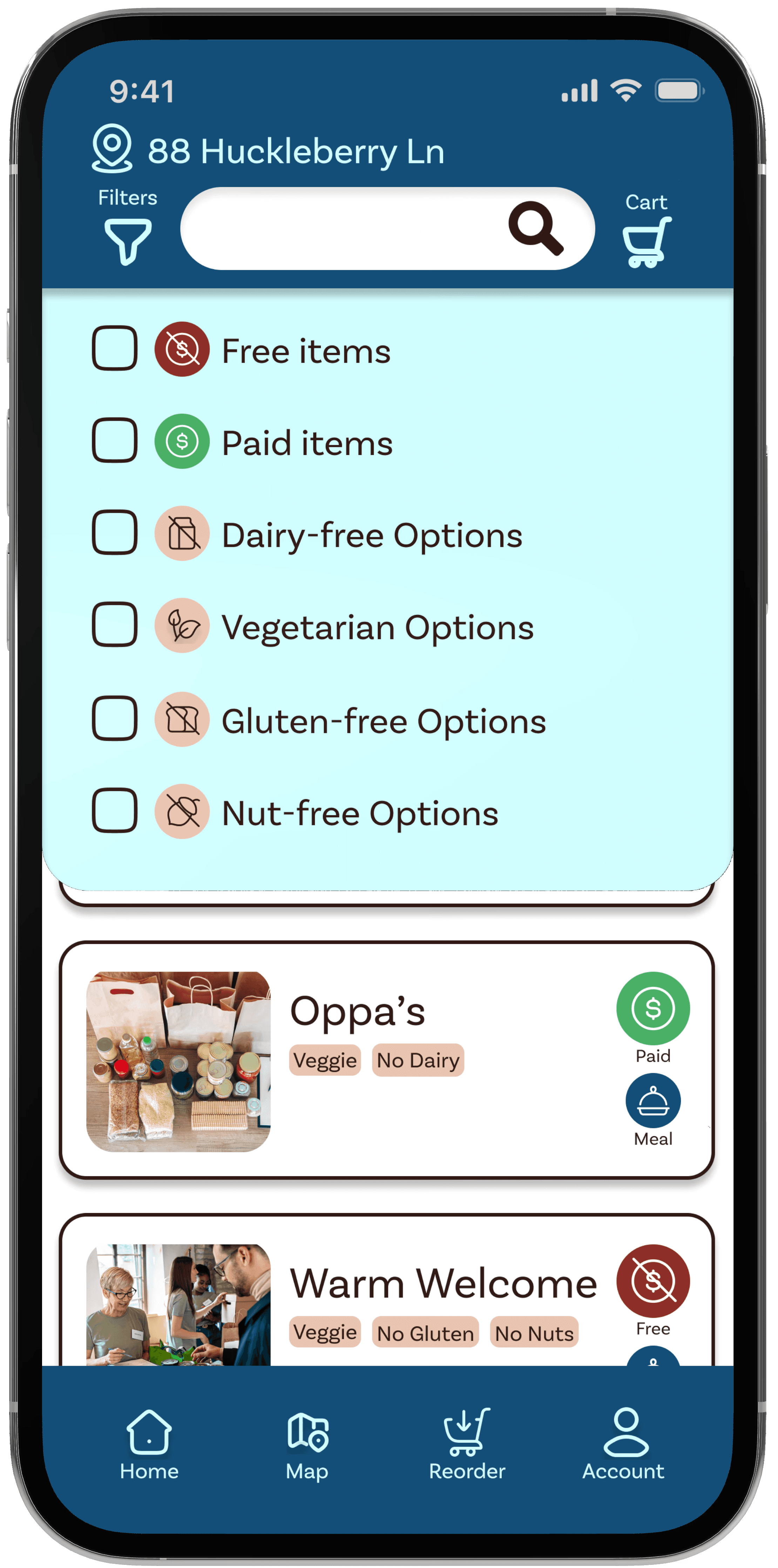
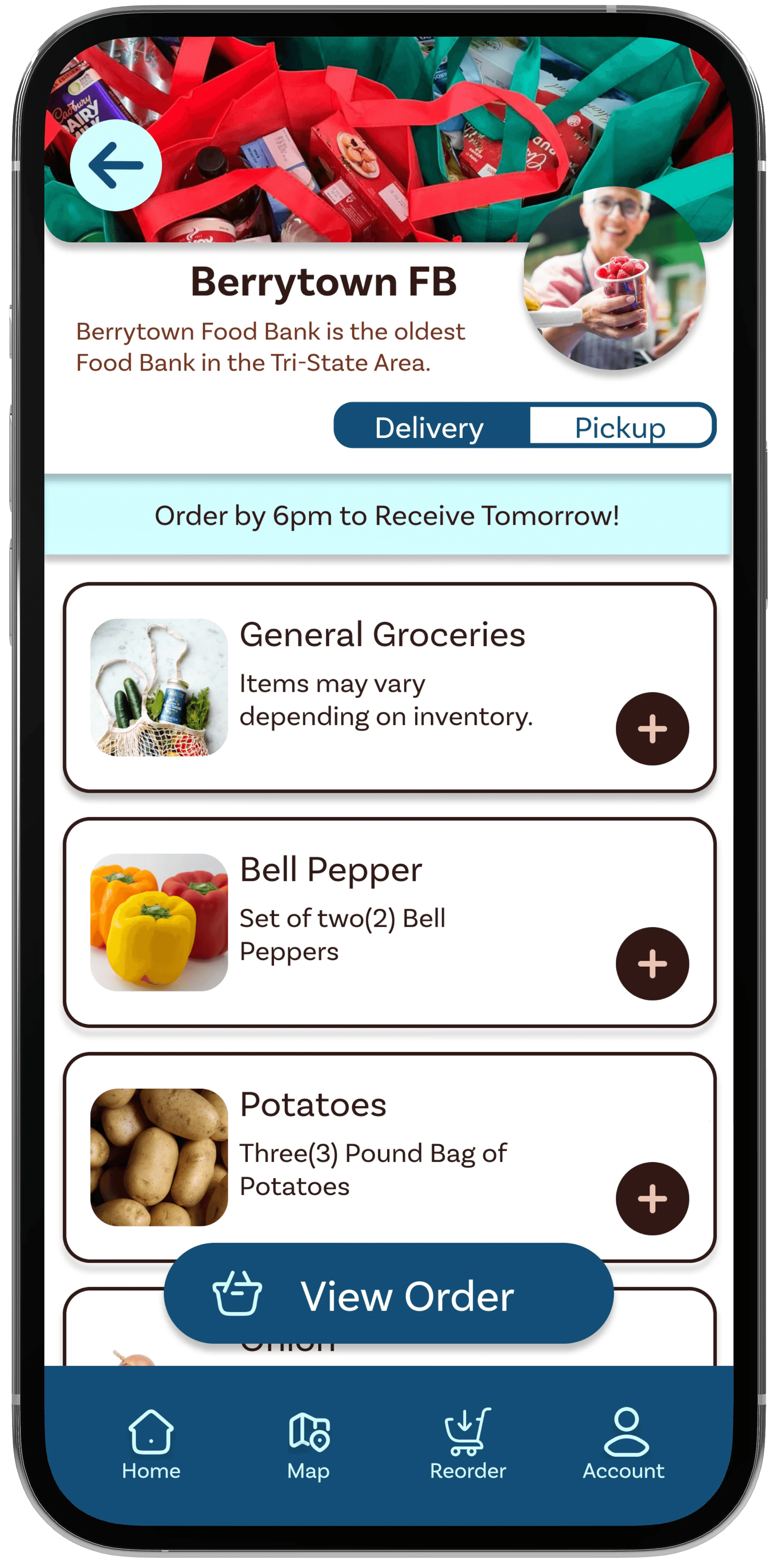
Clove is designed to connect people experiencing food insecurity with free or low-cost food in their area. Users can browse and request surplus items from local restaurants, meals from soup kitchens, and general groceries from food banks, all in one place.
Delivery is available for just $5, and every user has the option to waive that fee once within a 7-day period, resetting automatically every Monday. Because affordability was something we were unwilling to compromise on, this waiver ensures that the people who need Clove the most are never priced out of using it. Prefer to pick up your order yourself? Simply get your request in by 6:00PM and collect it at your convenience.
The 6:00PM cutoff isn't for fun, it gives partner organizations time to prepare orders, and allows delivery drivers to plan efficient routes without needing to run deliveries around the clock.
Once your request is sent, you'll receive an order number and confirmation email, with the option to turn on real-time notifications to track the status and location of your delivery.




The Process
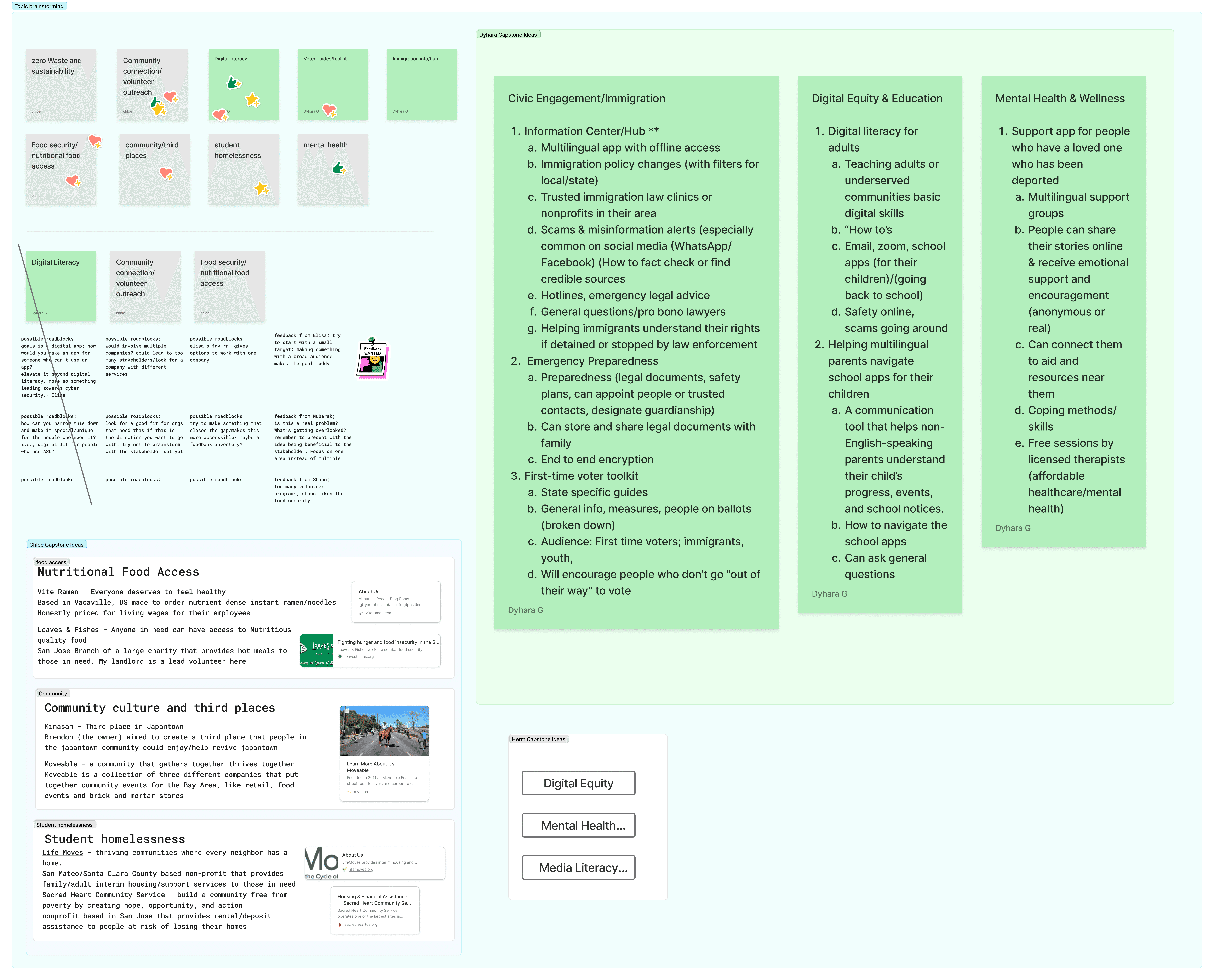
We began by each selecting a topic we were passionate about, with the requirement that we could identify at least two or three local organizations to reach out to for research. From there, we presented our choices to the group and voted on the topics we felt had the strongest potential to build on. After consulting with our mentors about potential research challenges, we aligned on food insecurity as our focus.
With our topic locked in, we moved quickly. We curated a list of over 20 organizations to contact and began scheduling interviews to better understand food insecurity, its causes, and who was most affected.
We spoke directly with volunteers, food bank staff, and the people who rely on these services across a range of organizations from Petaluma to San Jose. These conversations gave us a multi-layered view of what drives food insecurity, how existing systems respond to it, and where those systems fall short.
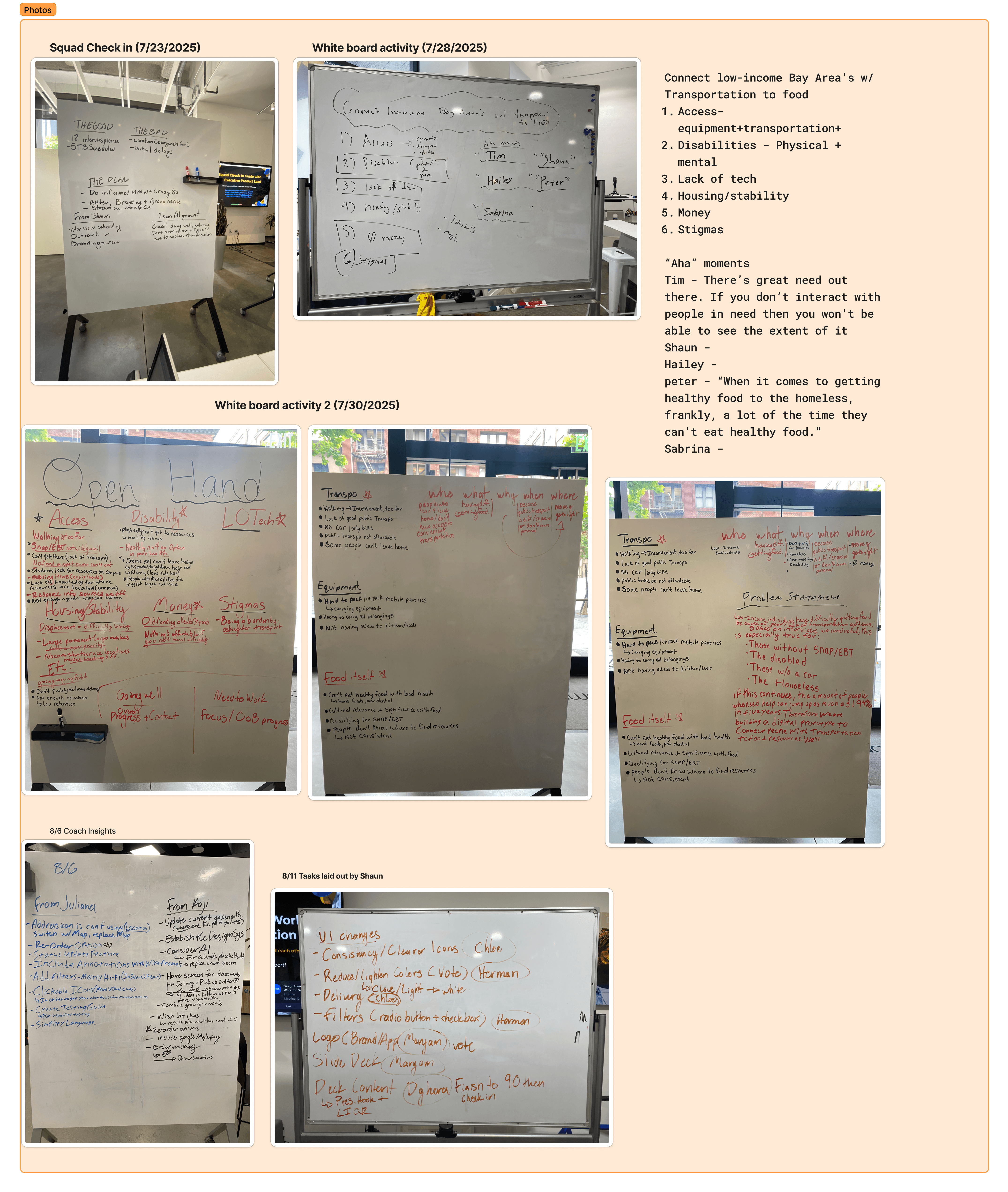
Cross-referenced with studies and research, a clear theme emerged; people who lacked reliable transportation faced the greatest barriers to accessing food resources. That insight became the foundation of our product: we needed to bridge that gap.
From there, we defined what our product had to do. It needed to be simple and intuitive to ensure accessibility, available at little to no cost, and built around options that users could depend on consistently.
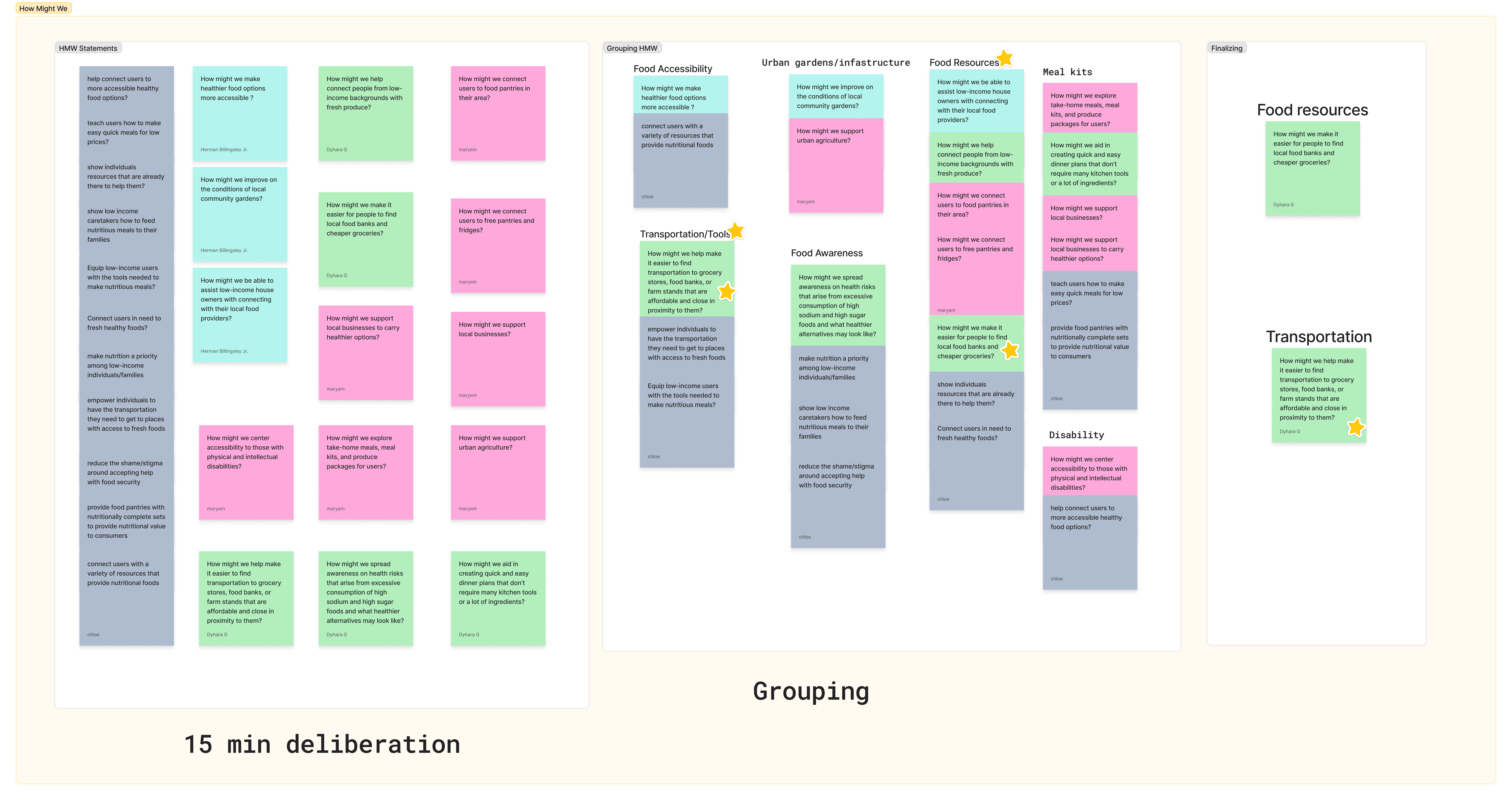
With those principles established, we moved into ideation -pitching and workshopping concepts until we landed on a model that felt clear for users and achievable for us to execute.
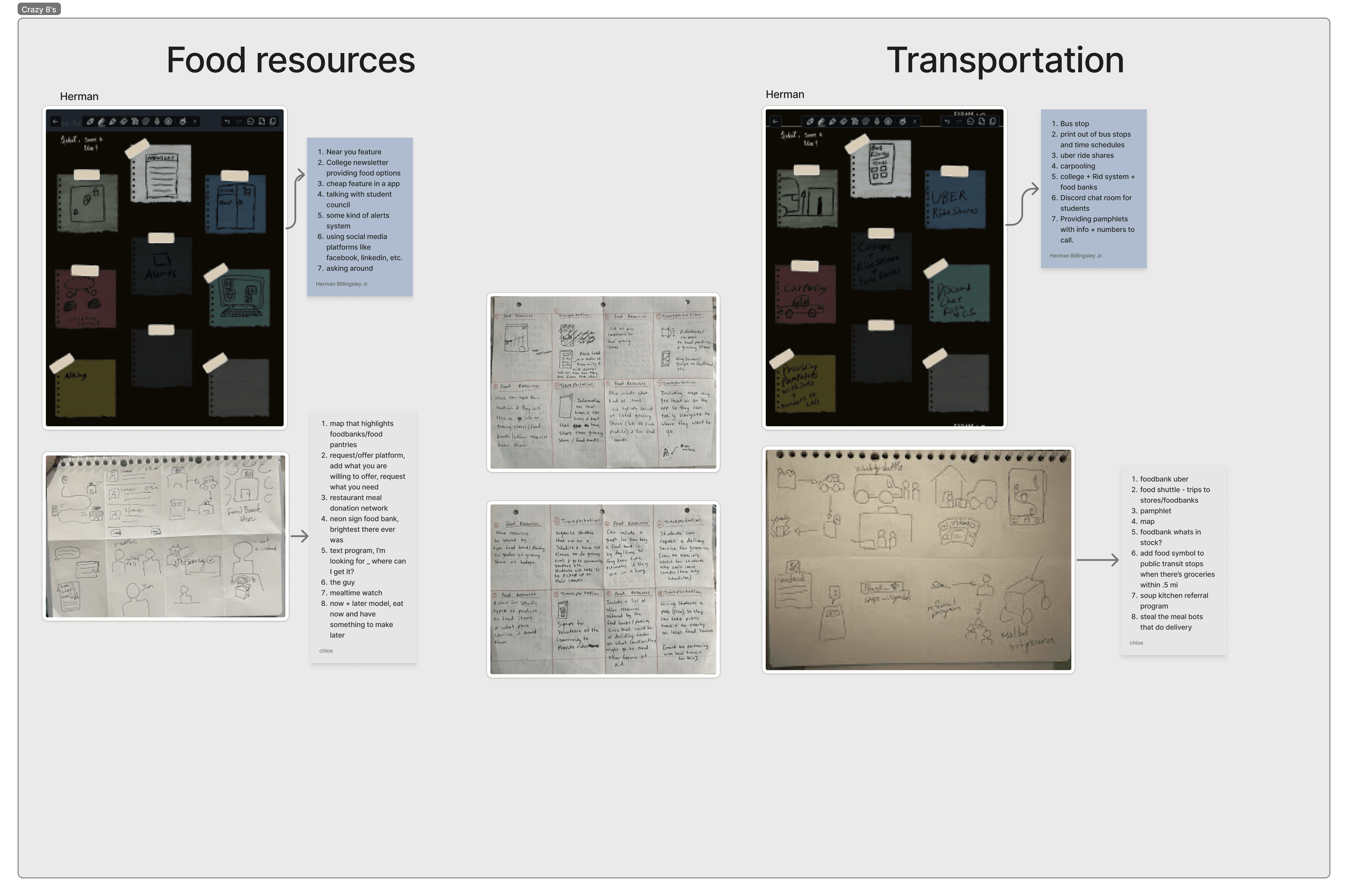
We explored multiple layouts before committing to a final direction, then moved into prototyping and testing.

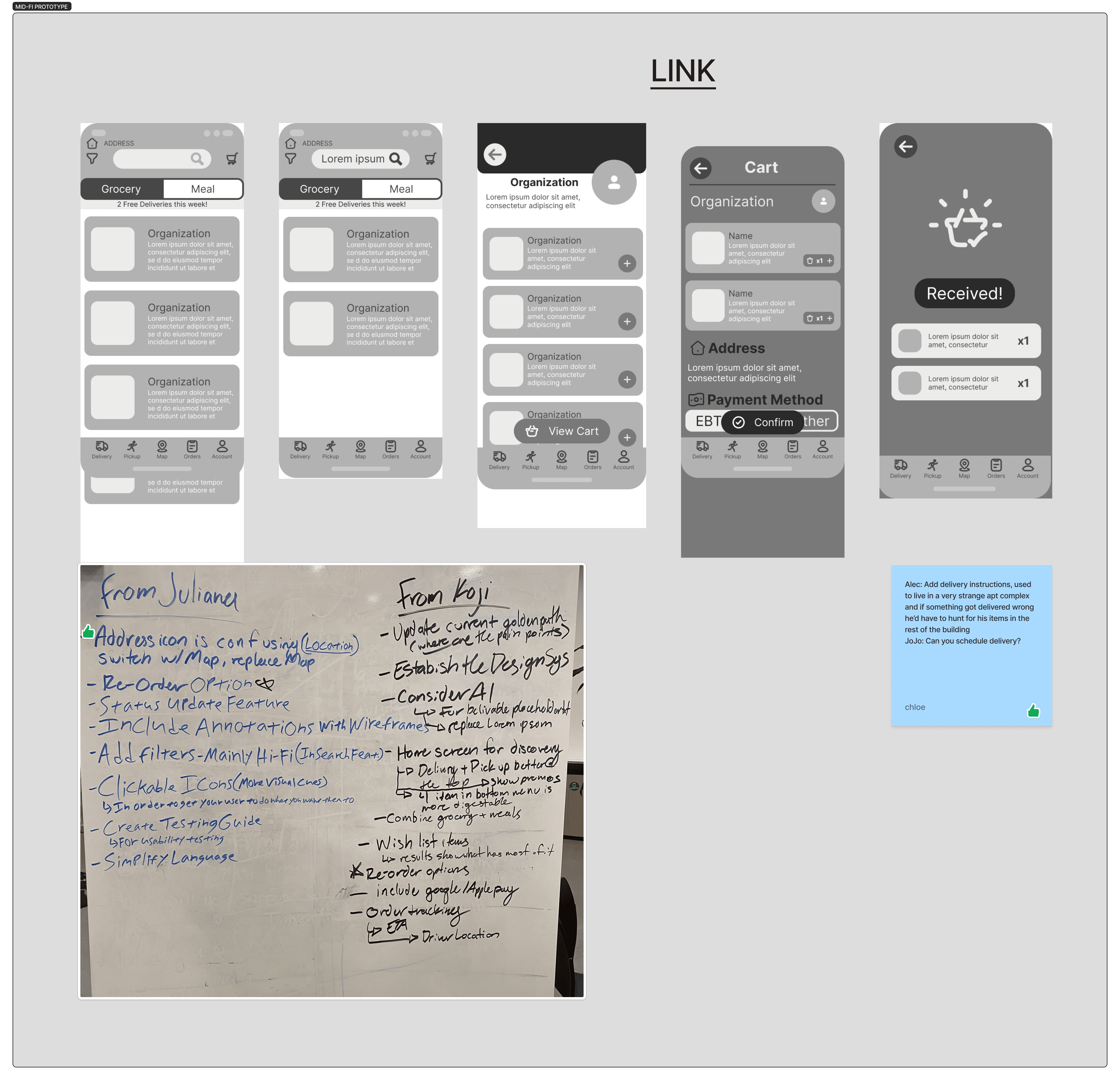
By the time we finalized our product, we had worked through four distinct versions- and proved our initial plans for our color palette wouldn't work since they failed WCAG accessibility guidelines, forcing us to make final adjustments before we could say we were truly happy with Clove.




The Reflection
I pushed myself into a leadership role on this project for a few reasons. I held myself to a high standard, I was the only one on the team who had previously completed a design sprint, and I had been learning and working alongside my teammates in the BRIDGEGOOD UX Design Apprenticeship for the past month, I was comfortable with my new teammates. Food and nutrition have always been causes I care deeply about, so leading a team on this particular topic felt natural. I was confident, perhaps overly so.
The list of over 20 organizations wasn't the result of casting a wide net for research. It was the result of not getting responses. Our initial outreach efforts were largely fruitless, and we began to worry we needed to change tactics entirely. Should we turn to research papers and studies? Visit food banks and soup kitchens ourselves? It wasn't until we shifted our focus from organizations as a whole to specific individuals within them that our luck began to turn. We learned that scheduling official meetings with organizations can take weeks, sometimes months, it was time we simply didn't have. So we leaned into personal conversations, prioritizing individual perspectives and firsthand observations over formal institutional responses.
Leadership was something I struggled with more than I expected. I don't think I communicated clearly enough how critical certain tasks were, and I was hesitant to intervene when things weren't progressing. Deadlines would pass with work left incomplete or not delivered as asked, and when I offered support it was often declined, leaving tasks to be reassigned and other teammates to absorb the extra hours. In hindsight, being a good leader isn't just about setting a positive tone. It's about knowing when to push, when to step in, and when to make a hard call for the benefit of the whole team.
I has also assumed that presenting at Wells Fargo would be motivation enough for the team to produce work we were proud of. I should have said that out loud. Instead, prototypes were often treated as rough drafts rather than representations of our vision, feedback became reactive, driven by gut feeling and surface-level tester suggestions rather than a clear standard to measure against.
What I wish I had implemented was a "vertical slice" approach. It's a method of evaluating what's been built by asking whether it reflects the finished product we're working toward, rather than simply tracking progress. It reframes the prototype as the manifestation of the vision itself, making it easier to identify what's working, what isn't, and what needs to change. I believe it would have given the team a clearer sense of direction and a stronger motivation to deliver something truly worth presenting.