FreshTrack
Many people forget what’s in their fridge or let food go bad before they can use it.
FreshTrack makes users more efficient in their consumption by tracking food items, planning meals, and notifying users of upcoming expiry dates to help prevent potential waste. Check what's good, discover a new recipe, build your shopping list, and let your household know what's been used- instantly.

Shahpar Fakhar | Chloe Limargo | Linda Dao | Diana Rodriguez |
Facilitator | Project Coordinator/Product Designer | Lead Researcher | Lead UI Designer |
Case Study, San Jose City College, 2025, Student Work, Concept
The Ask
FreshTrack is an application concept made and presented for San Jose City College for a fictional client. Following the guidelines of a design sprint, this project spanned over eight weeks.
This design sprint was overseen by San Jose City College as part of the Spring 2025 Design Thinking & Storytelling and Interaction Design & Prototyping classes. Using the Design Sprint framework as a general guide, we broke down our work to 5 steps; Understanding, Sketching, Deciding, Prototyping, and Testing.

The Opportunity
ReFED estimates 29% of food produced in the USA is tossed out- nearly half of that is from regular consumer households, translating to 32 million tons of the 70 million tons of food that goes to landfills.
Water, Energy, and Labor go to waste on food that’s tossed, about 80% of the water used in the US grows the food that's made, taking up 81-million acres of land. Food doesn’t grow out of nowhere, it needs to be cultivated, raised, and prepared before it makes its way to the table.
The average American throws out $760 a year in food, money that can be put back into your pocket with proper planning and a little creativity.

The Solution
FreshTrack helps you stop food waste before it starts. By keeping track of what you have, how it should be stored, and how long it will last, FreshTrack takes the guesswork out of managing your kitchen.
As you shop, simply add items to your pantry in the app. FreshTrack will show you how to properly store each item and give you a running estimate of how long it will stay fresh, including a calendar view that makes it easy to see exactly when something needs to be used before it goes bad.
If something spoils earlier than expected, mark it off and it's instantly added to your household shopping list, so everyone knows what needs to be restocked without a second conversation.
FreshTrack also supports multiple households. Staying with family or visiting friends? Switch between household lists to see what each home has on hand - making it easy to shop, cook, and plan together no matter where you are.


The Process
Fresh track began with a tagline-
Many people forget what’s in their fridge or let food go bad before they can use it.
We help plan meals, track groceries, and reduce waste.
Since this was our first introduction to the Design Sprint format, we took a more deliberate pace, one that gave us room to ask questions, explore ideas, and follow our curiosity without rushing past anything important.
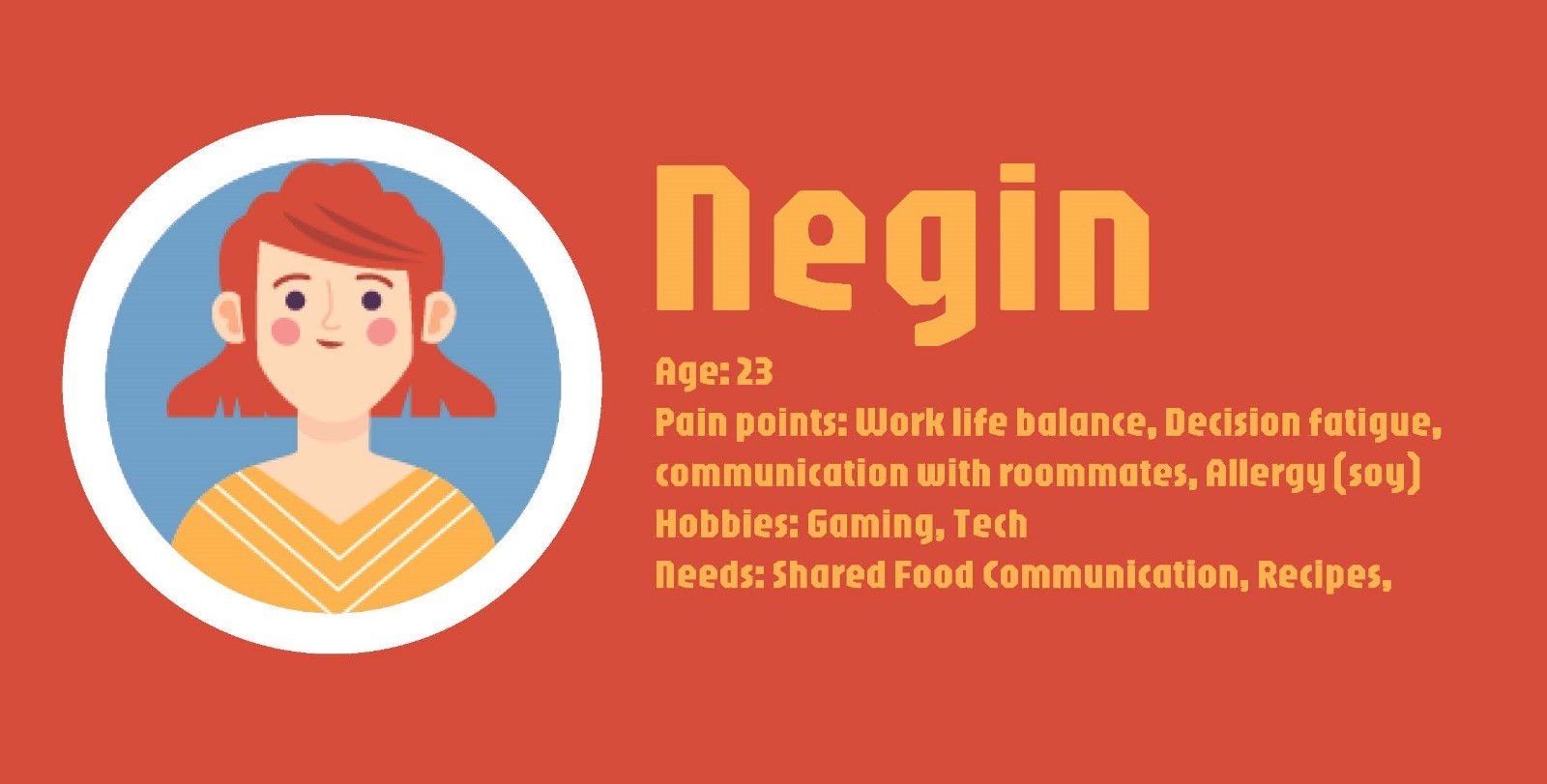
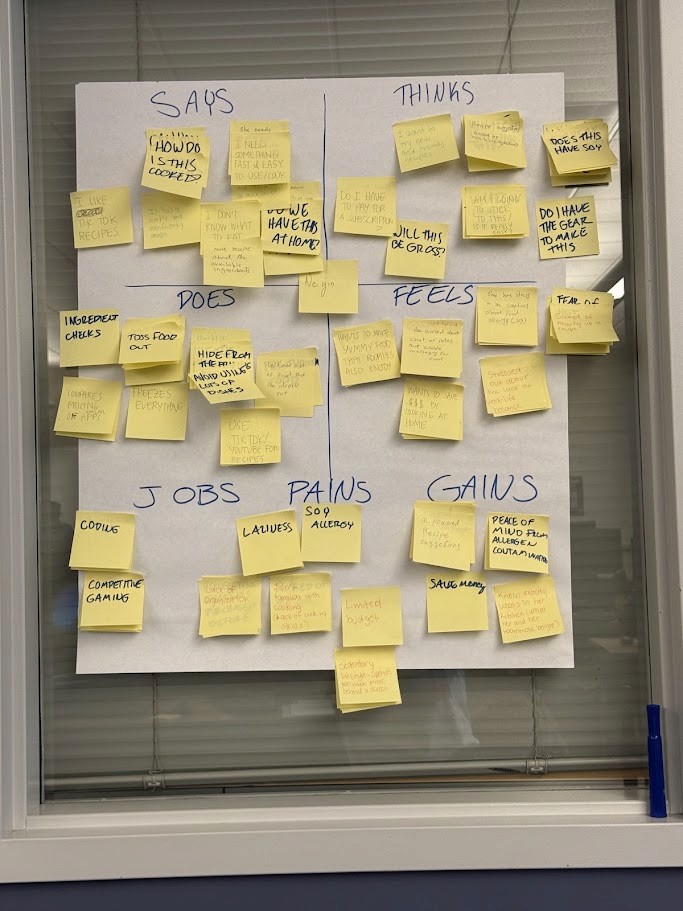
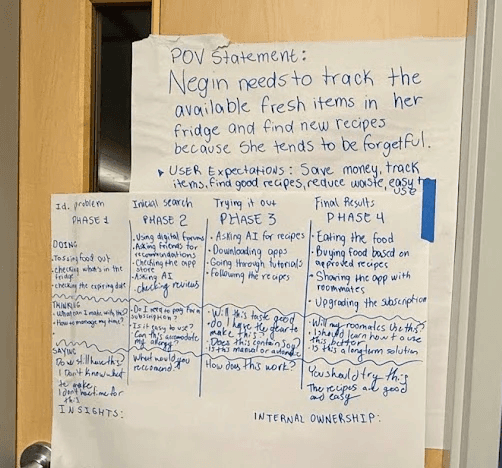
We started by building a User Persona to deepen our empathy with our intended audience, pairing it with an empathy map to capture their thoughts, feelings, and frustrations. From there we developed a journey map to understand how our persona moved through the problem, then drafted "How Might We" statements to frame our design opportunities.
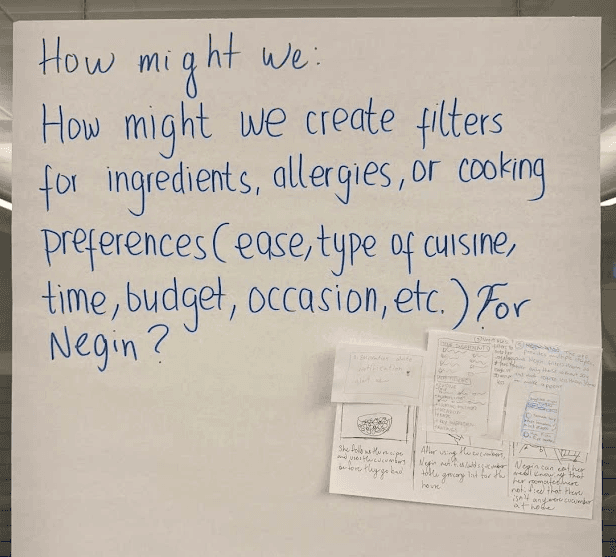
With a clear sense of what we wanted the app to accomplish, we moved into ideation using the Crazy 8 method- rapidly sketching eight concepts to push past obvious solutions and surface more creative ones. We then evaluated what we liked most and mapped out how our persona would interact with the app.

A paper prototype came next, tested with real users to gather early feedback, followed by a digital prototype and a second round of testing to continue refining the concept.

The Reflection
This is one of the first projects where I was really proud of my final prototype.
As soon as we got the guidelines for this and formed our groups: we did laid out how we expected the project to go and what our ideals and work styles were like to better understand the best path to take.
As this was our first run through the Design Sprint process, I was fairly concerned about what exactly needed to be done. We were taught all of the steps of the sprint as they were happening. So we ended up falling into just doing what we were taught without actually understanding why they were done like that, or what the purpose of that part of the process was.